The Shape Of Things

 I spent a few days with my mother in London last weekend. The Sunday was lovely and sunny and I decided to walk through Brixton, and Herne Hill, to Dulwich Picture Gallery to see the Ravilious exhibition. I wanted to tell you about it but a poem emerged instead. So, a poem it will have to be.


The Shape of Things

On my way to the gallery,

I walk a broad sunny road

With square red pitched roofs

And dormer windows

Rectangular gardens sown with sticks of copper beech

flowers galore, daffodils,

pink and white cherry blossom along the street,

gravel drives with perfect round pots

a lovely row of curvaceous lamp posts

an old railway bridge.

The scene is set in a sepia blue sky,

Painted with planes and slashed

with trailing lines of white jet cloud.

Arriving, hot and tired, I buy my ticket

but there is a wait.

I sit at the café, outside at a table

a lone shape in the stretch of the day

my ear cupped to catch the words of the well dressed women,

and well to do men.

From nowhere

Out of the blue of the sky,

from the green of the grass,

the yellow of the sun,

I hear a voice

I have been watching you for a while.”

I shade my eyes, my hand peaked

He stands, a handsome grey silhouette

I am flattered.

He and his sister ask to sit down

I gaily wave my hand.

They order coffee. He asked about mine.

His eyes were oval shaped and sparkled.

I  almost fall in love.

He had just arrived from Australia

His sister started to plan his stay.

Tuesday, Belfast. Saturday for friends.

Then Southampton,  Bristol. Back to Gatwick.

He didn’t know the lie of the land.

He sought clarification with a wallet, coffee cup and me

Marking us out.

“I am West.” I said. “Beyond the coffee cup.

Southampton is the other way.”

Conversation turns to distance.

“I am not so good with numbers,”

he turns his eyes to me again.

We are almost there

How many children have you?”

his sister asks him, suddenly.

He answers “three

and one wife,” she adds.

I walk into the gallery with care

Proud, full of grace

Straight back

I am a beautiful woman

I know my place.

I am here to see Ravilious

An artist I had not heard of

And, this time I fall in love.

An ancient no. 29 bus sprawls

Abandoned

In Great Bardfield, Essex

On four wooden barrels

With a winding staircase

All shape.

A waterwheel of rotary blades

Four waddling, white fat geese,

pecking.

A south coast beach

a blue rimmed boat wrapped

in barbed wire

on a landscape of water colour.

An impression of surrealism!

I began to stir as I stared

Ravilious had captured the world

And it was there, there, in front of me.

Planes, caravans, bikes, bombs

Fresh interiors

Dash patterned rooms

Featured from circles

Squares, curvaceous and round.

He captures the White horse in Wiltshire

the Cerne Abbas Giant

Cut out of the chalk

and lets them rests  on the hill side.

Then Ravilious goes to war

Paints darkness and light

A Train Going over a Bridge at Night

A line of explosions of sun on sea

A triangle of dawn over day

Round faces staring in submarines.

Slowly he showed me the shape of things.

Standard

The Voice, the Reader and the Writer

Kate reading at Boyne Berries launch

Kate reading her poem, Spring Invasion, at Boyne Berries (photo Michael Farry)

I went to hear Kevin Barry at a writers’ workshop, organised by Stinging Fly, a few weeks ago in the Writer’s Centre. I love Kevin Barry, his voice, his books and his looks. He described himself as slug bouncing a rubber ball against a wall when he spoke to my MA group in 2012 and somehow the image works for me. I also like his recommendations. This time round he suggested we read VS Pritchett so I downloaded ‘A Careless Widow and Other Stories.’ I can, in turn, recommend them myself.

They are beautifully written with perfect detail. I loved his description of the ocean, “the sky was like another country hanging over it”, or his character who has “a high sandy voice, with grit in it.” I learned from VS Pritchett that I need to give my characters more detailed descriptions. But I was able to draw some solace from him because he vindicated my voice.

All his characters are strong, vigorously drawn and slightly odd but I felt immediately at home with them. In some strange fashion, each story is detached in a very English sort of way but also very familiar. I can’t say what it is exactly, I just felt reassured by his stories. I like the slightly wacky, off kilter style. It reminds me of my own work. I am in no way describing my own writing as being anything like VS Pritchett’s, not at all, but maybe our shared nationality does reflect something in common. I do not have his stretch of imagination or pithy style. His work comes from a pool which is clear blue, rippling, breathtakingly sharp and exhilarating. Sadly, I am still lurking in the mud at the bottom of that pool, clearing sludge. I can only learn! But there is a voice there I understand or maybe, to keep in metaphor, a ripple I recognise.

My next read was riveting rather than rippling. After reading John Banville’s review of The Blue Room by Georges Simenon (Irish Times, Sat 21st March) I downloaded the book (the joys of the Kindle). I like John Banville’s books. I like his prose which I find is shadowy, opaque and complex and I like his focus in recent books on time and memory. In contrast, I found The Blue Room a beautifully sparse book but also, at the same time,  incredibly intricate. It is very clever. It is the story of love, life, a murder and a court case. It is told backwards by a voice on trial  which reels in all the detail and complexity of everyday life,  love, marriage, family, work but has the detachment of the court approach. It is a clever technique. Each event and explanation takes place in a room and each room has it its own individual interpretation. The voice and the place are key. The finale is arrived at slowly and has the feel of a climax. It is a beautiful book. It has passion, depth, and detachment. Banville praised it highly. I wonder if a writer admires another’s work because they recognise the voice and or if they like a book because it’s not their voice at all.

Now, I have just started Papillon by Henri Charriere, and it’s very different altogether. It seems very Twentieth Century. Imagine being old enough to be able to say that! And what do I actually mean. Is there a 20th century voice? Is there a 21st century voice? And presumably it changes according to nationality. Hum, I’ll have to ponder on that and get back to you.. Better stop, before I go off on a different track altogether.

Standard

Peter Pan, Poppins and The Importance of Place

peter pan

It was the array of colour, energy and the spectacle of Peter Pan on Ice at the Bord Gais Theatre performed by the Russians that I loved best. At first, I felt a little teary eyed at the ability of these Russian Ice Skating Stars. I was in awe of their magnificent skills and daring. How I have wasted my life, I thought, working in local government. I too wanted to twirl, slide, jump, twist and fly, my limbs and heart soaring! However, I completely forgot about such disappointment in the second half, and got sucked in – me and the six year old with the loud voice in the row behind (I think he may have a future in radio commentary), whooping and clapping Captain Hook and First Mate, Smee. I loved the crocodile. Mind you, the little boy behind was disappointed that he didn’t gobble up more of Capt. Hook. Captain Hook was sublime, a real pantomime pirate on ice, but Russian, exotic and handsome. The choreography and set were amazing. The trapeze work (the sails of the ship) was incredible. I loved the pirate ship scenes. Despite there being no talking, I always knew exactly what was going on…Indian squaws being kidnapped, lost boys being burned at the stake, mesmerising mermaids (wonderful costumes), battles. It was only brilliant, as they say here.

So, I am in Dublin, dog sitting for a friend who is cycling around South Africa. I have the joys of Emma, a bulky thirteen year old golden lab with the heart of a puppy. She gets so enthusiastic about walks and tickles, she jumps up and down on her four paws, two at a time, back then front. She can only jump a few inches so she looks hilarious, a sort of giant mechanical puppet.  Her two inch enthusiasm is particularly amusing because Poppins, my puppy dog who is with me, can literally toss herself four feet in the air, rather like the Russian Ice Stars. While I am tugging with both hands at Emma (who does not go off lead) trying to distract her from the apparently delicious delights of dried up poop (the pooper scooper skills of Killiney need serious dog warden attention), Poppins (who does not do leads) is leaping along the narrow ledges of the precipices and ravines of Dalkey gorge, frightening the life out of me and every other walker.

After the theatre, the daughter and I went to a great Moroccan restaurant where we discussed the office politics at her work place. Office politics! When I first worked, I thought it was only in my work place that the people were rather unhinged. But as life went on, I discovered that ‘office politics’ were a natural phenomenon, everywhere. People are extraordinary. They have so many talents, skills, abilities (whatever the arena, be it religion, law, acting, medicine) so much passion for their work, yet their every day energy is focused on jealousies, competition, and aggravation  that serves only to undermine what they do. There’s nowt like folk! While listening to daughter, I tried to imagine how the office politics of the Russian skating stars might pan out (ha ha, Pan….sorry)!

Anyway, it’s great to be in Dublin for a while. On Saturday, I went to the Stinging Fly workshop in the Writers Centre with writer, Kevin Barry, which I really enjoyed. I do like Kevin Barry. He has a practical, unpretentious bent to him and the most expressive face that moves or morphs into a range of characters when he is reading. He described himself (when he spoke to my MA group in Galway two years ago) as a slug bouncing a rubber ball again the wall of his office, an image that stays with me. On Saturday, I particularly liked what he had to say  about people and places, how the physical environment moulds and manipulates its people. I think that’s true. People grow out of the grime of the city, or root down in the country. It is ‘place’ that forms our culture and therefore our characters (fictional or real). Yes, ‘place’ does influence and mould. Every place has its charm, horrors, dark corners, vistas and every place sporns its people. Cerebrally, I knew this already (I am always contrasting my country life in Cavan with my city life in London and Suburban life in Dublin) but it hadn’t occurred to the writer in me.God, it’s a challenge living so many lives. I can never keep up with which bit of me knows what!

Oddly enough, my poetry assignment this week was also about place. So I will end this blog (as it is time to embark up the hill with Poppins and Emma) with the first draft of a poem.

Avalon in Suburbia

This is the place where pebbledash inclines to pine palace interiors
with white sofas, orchids, muesli and vast, glass swathes of light
softly lit.

This is the place of mock Tudor, port holes, red brick chimney stacks
secured by green laurel, heather, hawthorn, precise pampas grass,
shaped.

This is the place of prim gated estates, pristine porches with bays, pancake
mix faces, golden labs, shih tzus, petite poodles, range rovers, BMWs
on leads.

This is the place of vistas of sea, castles of dreams, piers, bandstands, proms,
pavilions, regency railings, gardens of ice cream, fountains, Georgian front doors, green
caterpillars.

This is the place of delicious, out of date fridges, air travel, suitcases on four wheels,
locks, security alarms, timers, deserted front gardens. This is the mythical place where no body
lives.

Standard

Meandering Thoughts on the Origins and Meaning of Evil

devil

Last weekend was food for thought. I tried a new recipe: pork with a delicious creamy mustard sauce that put fire in our bellies…and fire in our thinking! We had a great family discussion which ranged around immigration, UKIP, housing. The next night we watched Hannah Arendt, a film about a Jewish philosopher who covered the trial of Eichmann, a Nazi kidnapped from South American by Israel and put on trial in 1962. In court Eichmann claimed to be not guilty because he was doing his job and following orders. According to the film, Hannah Arendt found him to be a mundane figure, and after listening and watching him, began to wonder whether ‘evil’ was not about selfishness and power but rather came from thoughtlessness, and the tendency of ordinary people to obey orders and conform to mass opinion without critically evaluating the consequences of their actions and inaction.

So is that the case, I wondered. Is it the Fine Gael Government that is ‘evil’ in relation to the water charges or is it the people installing the water meters (one cannot equate the actions of the Nazis to water charges, it is the principle I am discussing). The holocaust was abhorrent and carried out by many ‘doing their jobs’, following the rules, not taking responsibility for their actions. Is that where evil stems from? Or does evil orginate in the leaders, (Hitler, Maggie Thatcher, Charlie Haughey,  Enda Kenny) who make the laws? Sadly, either way, it means that ‘evil’ stalks our society for that is how the world operates and always has done.

I am not sure it is helpful to label our society evil.  Maybe the word ‘mad’ is better. I do think it is mad to allow 1% of us to own the majority of our wealth and allow our behaviour to destroy our natural habitat. So why are we mad? Does it stem from selfishness? Or does it stem from our inability to engage and critically think about the future that will result from our actions?  None of us want to spend hard earned money by changing our heating and transport habits unless we have to (or are told to by the Government). And how do we stop the inevitable destructive character of capitalism (because that 1% won’t be able sustain the purchase power needed) when today we need to focus on work to put food on the table for our families (and enjoy a few bottles of wine). Do we think critically about the future? Yes, we all love to criticise! It’s our acting on it on as an individual to change it that is the challenge, and that is about individualism and selfishness.

So I am back to thinking that ‘evil’ or ‘madness’ must be sowed in our individual selfishness, greed or laziness. Is it selfish to stop people coming into Ireland or the UK seeking work, refuge and life when there is high unemployment and poverty already in our society? I think so. Is it selfish to look after our own first when others are worse off? Yes. But then others may think it is only sensible. We can’t take responsibility for the world. But I believe turning people in need away is a slippery slope to the disintegration of our civilisation and a slide towards evil, if not madness. It is certainly similar to Eichmann’s argument. Immigration barriers (first to non EU citizens, then to non Western EU citizens, then to our neighbours), suggests to me one person is more valuable than another and who is to decide who is most valuable? I think you will decide your family is more important than mine.

I am reminded of words my mother in law spoke at another (extended) family occasion a few years ago (I think lasagne was then on the menu). We were discussing which was the most valuable virtue:  charity, grace, mercy, kindness or compassion. I was struck by the discussion as it seemed that none of these behaviours were particularly prevalent in our society today. However, my ninety five year old mother in law was emphatic that it was kindness. I bow to her experience. I think she is right. Kindness is something every single one of us can do. It is relevant to each of us. It is a part of our everyday world. An act of kindness makes both the recipient and the giver feel happy.  So, that’s another new year resolution: to try and be kind.

So to end my meanderings about the origins and meaning of evil…my suggestion is that, wherever it comes from, whatever it is, we must kill it with kindness! That may seem a little glib, and not address the many issues raised. But it does come down to principles in the end, and in this complicated world, it is helpful to have guiding principles by which to live one’s life. I ended the weekend watching Silk, a UK legal series. The only way the barrister survives in her chosen profession (which operates in a pretty ruthless, immoral world) is according to her guiding principle, ‘innocent until proven guilty.’

Standard

Reason and Love

kate garden

I have just finished reading The Children’s Act by Ian McEwan. This is my favourite book so far by this author. It is a reflective piece, beautifully written, about love, reason and the meaning of life. It is written from the view point of a senior high court judge who is ruling in a life and death case of a Jehovah’s Witness boy. It shows how she reasons (the welfare of the child is paramount), how the law frames our lives and her response to the boy’s reaction, while at the same time dealing with her own emotional responses to her marriage breakdown. Ian McEwan deftly reflects on the history and influences that frame our thinking and snare our emotions. His descriptive prose is lovely, both in terms of physical detail (wonderful descriptions of London) and mental torment. In his finale, and the book is like a classical concert, through the music of his words he lifts the spirit and sound and the reason of mind and then places them gently back on terra firma, where we all belong.

It was a wonderful book to read as my daily routine had become a little mundane. Before reading the book I had just started a blog, railing at politicians, politics, Grammies, BAFTAs, war and terror and my powerlessness which seems to be exaggerated by old age. I had just read Kevin Barry’s collection of short stories, Dark Lies the Island. They are strange but cunningly realistic of today’s world. They shade the underside of normality, each one a double exposure.  The stories describe the routine daily horrors of drugs, terror, drink, and abuse but without the tenor of screaming headlines. They are brilliant, but alongside our politicians, the war  in Ukraine, and the EU response to the Greeks, they heightened my feelings of disappointment, sorrow and frustration.

In contrast, Ian MacIwan lifted me out of the doldrum of daily life and reminded me of the glory of individual human reasoning, and the meaning of life – however shite it sometimes appears.

Standard

Character Correction

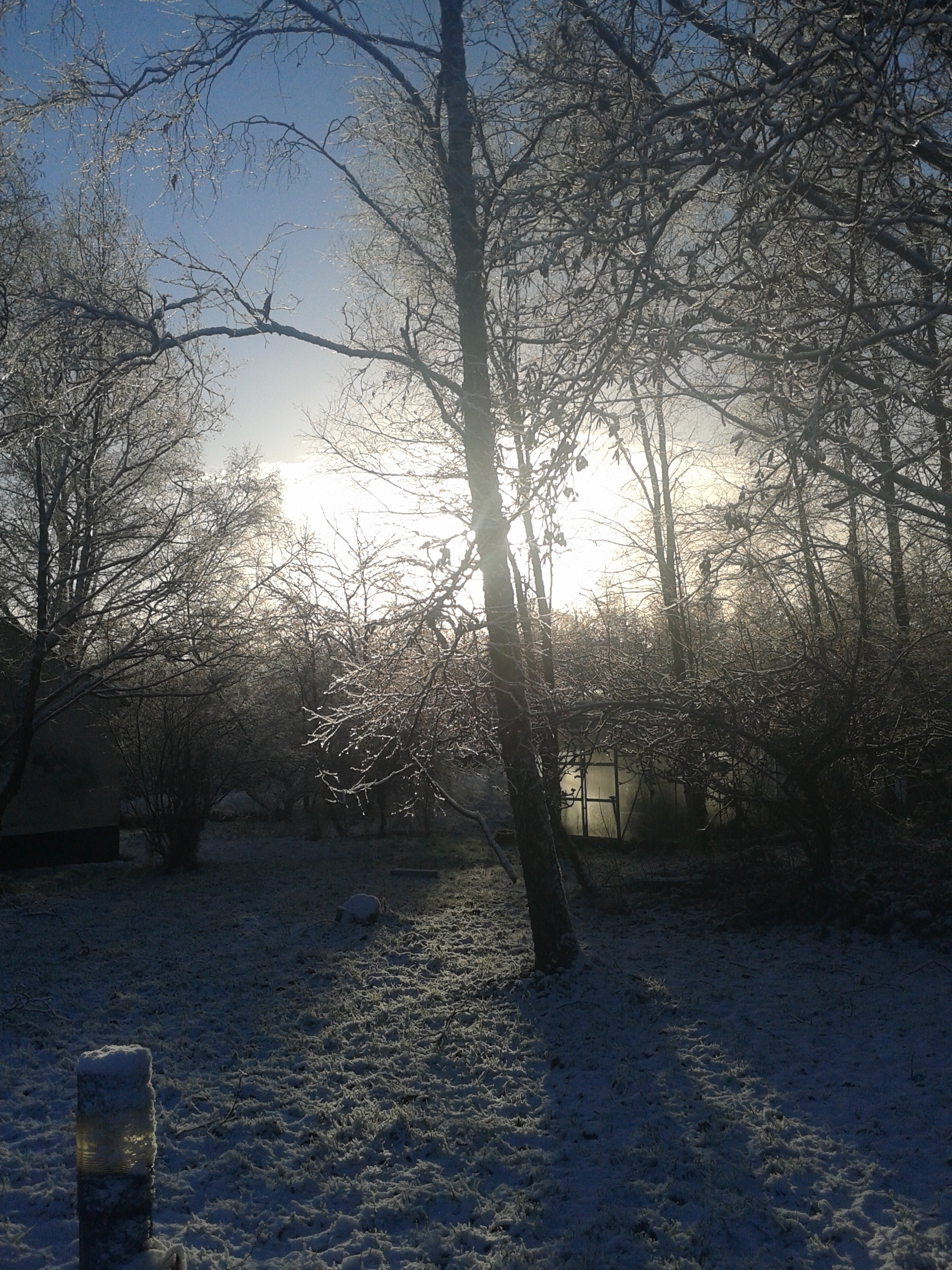
In a fit of enthusiasm and self encouragement yesterday, I wrote that I was a beautiful, life loving, committed, passionate, caring, engaged older woman. Having posted it, I walked down the lane in a blizzard of furry white flakes that melted as soon as they touched any part of the world (unlike the army of snow that moved in overnight), and decided it was all gobshite.

Fair enough, over the years I have been described as such by people who have loved me, but is it what I think now? Beauty is in the eye of the beholder, and is not important. But life loving? I love to enjoy myself, and tend to do what I love, (like most of us) but life loving gives the impression of one long happy wave at the world. That is not me (though I try sometimes). Committed? To what? Family, friends, a few principles. Yes, up to a point, no more than anyone else. Passionate? Yes, after a few drinks. Caring? Usually, if it is something I care about, but not at all if I don’t. Engaged? An interesting word to choose as I think this is the issue for older people…it is too easy to disengage.

So, I am sorry, I was not careful enough in my writing yesterday and I want to revise my older women characteristics. I want my list of attributes to be:

Devilish (I am reading Gorky),

Thoughtful

Cynical

Passionate (after a few)

Lazy (about things I don’t like doing)

Intelligent

And, I am not a finisher (I can’t think of a correct adjective). I always got that in those psychometric testing. Maybe that’s why I don’t like getting old!

snow

Standard

Its all in the process

People say that the ‘teenage’ years are the awkward ones. The hormones rage, life is full of learning, experiences are new and exciting, days stretch out ahead and life is all about you, you, you: what you are going to do, who you know, who you are in love with, and who you don’t like; so begins the glorious obsession with  I which has led me here.

Personally, I think the ‘third age’ is the more challenging one. By this point, you realise you are no longer centre stage, what you think doesn’t matter, your world has shrunk, and the only new experiences are arthritis, stiff bones, if you are lucky. Love is less of an option. You grouch a lot more! And, I’d say that generally you have become disillusioned about the possibility of a fair and free society!

Sometimes, I  like the idea of slowing down, being more reflective, enjoying wisdom, and passing on the struggles of the world to others, but it is not that easy. I still go to war with myself, leaping from one irrational conclusion to the next. I prevaricate more, and my thought patterns have become increasingly abstract. I am also more impatient. And, I forget things! My back and hips hurt. I get tired. And, I don’t have as many solutions as I used to. In fact, as I get older, I seem to know less. Doesn’t that sound a lot more challenging that being constantly in love, managing hormones and planning how to change the world? But, one thing I have learned is that there are no absolutes and the whole point about change is the process.

The bright side is that I have time for writing,  to swim, do workshops, cook, read, watch TV, go to exhibitions, theatre, visit my mother in London, get involved in local stuff (Cavan Women’s Network are trying to get more women into politics – so still trying for the fair and free society!)

So why do I feel disgruntled about getting old? Well, I’m not going to be. I have just decided I am going to be more relaxed and to stop obsessing like a young teenager! I am a beautiful, life loving, committed, passionate, caring, engaged older woman. It does help to say it, write it down.

Now, let me tell you about the really bad dose I have just had….the face that felt it would explode, the sore eyes, the stuffed ears, the captured chest..

.a sick kate

Standard

Tea with White Russians, Nazi Germans, Nora, Johnsey, and the Abolitionists.

kate 002I really enjoyed Christmas this year. It was packed with Assam, Countess Grey, Irish Breakfast and Chai tea leaves swirling in the lovely new glass tea diffuser (which was broken on the 28th and replaced by a much nicer, cheaper one from Dunnes the next day). We danced with White Russians (might have had something to do with the smashed diffuser), Whiskey Sours, Piscos and Duck. All delightful. And the mornings were spent in bed with an array of characters: Nora, Thompsen and Hannah Doll, Handful and Sarah, Johnsey, and a Stinging Fly. Let me tell you about them.

I finished Martin Amis’ The Zone of Interest just before Christmas. It is a ruthless depiction (as it would have to be) of concentration camp life in Nazi Germany and was unpleasant to read but fascinating. Rather horrifyingly, I was able to draw parallels with our society today too. I had determined never to read Martin Amis again after reading his autobiography in which I found his arrogance and ego unbearable. Portraying Nazis, these attributes come to the fore again in this book. He looks at the moral decline of the German officers as they struggle with their torture and killing of thousands of Jews coming in by the wagon load. As the numbers increase, so do the self justifications (sound familiar?) and the madness. Camp life is harsh for the Germans who become reliant on alcohol and pills. Cruelty begets cruelty until everyone is a bare body of madness. The book is full of cruel sex, cruel torture. Every person becomes an object of slavery. Power corrupts…

Amis’ vocabulary is extensive. Thank God I was reading it on my tablet so that I could refer to the dictionary easily. He bastardises the German language. It is an unpleasant book to read and I wouldn’t necessarily recommend it. It is an extraordinary story, bleak and horrifying.  Its harshness has to be but it also is written with an unedifying arrogance. But, I don’t know how else it could be written. Amis’ list of acknowledgements is extensive. He has done his homework and the last section in the book discusses the notion of ‘why’ this happened and is interesting. The book was a depressing read. The writing was tinged with smugness. But it did stir me up and made me discuss it!

After that, I wanted a nicer story, with a lilting graciousness. I’ll read Nora Webster, I thought though after listening to an interview with Colm Tóibin, which irritated me, I had decided not to (I am rather weak willed, n’est pas?)

For the first part of the book, I felt like an outsider. The print lay between me and the story. I got more immersed as I read on, but I felt slightly removed from the pages throughout. Early on, I found myself questioning Tóibin’s attitude to Nora Webster. I had heard him say she was based on his mother and I wondered if that was a mistake. I felt she was not depicted fairly. I wondered if his own anger and grief as a child had shaped her character. Watching Nora evolve was a little like watching a child begin to appreciate that a mother is a fully fledged, rounded, thinking human being and not simply there to serve and protect.

Tóibin is a great writer and I enjoyed the book. It has all the usual rural and town characters, and his references to the Troubles in the North and Charlie Haughey were interesting. But I didn’t understand Nora Webster. Maybe this was because she was a rural Irish woman of her time and I am a city English woman of mine but I’m not sure that is the case.  I felt Nora was one dimensional and more of a sounding board for Tóibin. I understand rural life can be very restrictive…but I felt as if he was using her as a foil for himself. It was as if she had to learn all her natural instincts.

Talking of rural characters, I picked up Donal Ryan’s The Thing About December in the Eason New Year sale. I wish I hadn’t. It was a grim depiction of rural life in Ireland. In the Spinning Heart (which I liked), Ryan showed his ability to portray the minutiae of human weakness. He is as ruthless here too. He captures the narrow mindedness of rural life, the meanness of people, the ignorance and cruelty. He shows what happens when an individual does nothing and how nothing grows into something full of hatred and violence. If anything, it reflects on how important it is that we all do something,  however little, to direct and shape our own lives.

I also read The Invention of Wings by Sue Monk Kidd set in pre-Civil War Charleston. It is about slavery and is based on the story of two sisters who became active abolitionists and Quakers. The first part which looks at the relationship of the older sister, Sarah, with her slave girl, Handful, I found a little unrealistic. But I was gripped by the second half as Sarah and her sister set off on the trail of fighting for abolition. Fascinating. Sue Monk Kidd also writes beautifully. A recommended book!

So, the New Year began. Hanging with Elephants is next. I didn’t have time for the Stinging Fly yet.

Standard

End of Year Stats

sea and sky

On a Christmas walk with my daughter, we looked back at our achievements. It’s a challenging question for an unknown aspiring writer, particularly for someone who has always enjoyed the satisfaction of ‘outcomes’ in work in a previous life. At first, I couldn’t think of any achievements.

But, of course there are achievements. I went home and counted them all up.  I think I will share them. I hope you don’t mind.

In 2014, I wrote 20 new poems. I began six new short stories. I submitted approximately 100 poems or short stories to magazines or competitions (and it takes me ages to make sure I’ve got all the details correct, details not being my strong point) and got rejected by most.  I got published in five publications, and shortlisted twice. I had a 15min fringe play performed. I did three or four readings. I established and organised five successful AT The Edge, Cavan literary evenings, and planned and ran four poetry and writing workshops throughout the year. I wrote 50 odd blogs. God knows how many books I read. And I must have cleaned the house 52 times and cooked 300 dinners. I probably swam at least 150 km and walked 500kms (these last few stats may look desperate but they all require commitment!). I’ve been in London five times this year, five days in Spain and three in the Alps. I have gone to a poetry workshop in Galway twenty times. The odd thing is I still feel as if I am malingering.

New Year’s Resolution: To write everyday ‘I am not malingering’.

I hope 2015 is brilliant for you all!

Standard

Planning Christmas in the Middle of the Night

The wind outside sounds like the sea raging in the dark. Spray, waves, tidal rhythms as it blows through the sky, tossing and turning. When I lived in Shankhill, Dublin, I used to think the tumbling sea sounded like the roaring of lorries on the A1 in London. The mind in the middle of the night is amazing.

Now I am thinking of Paella. Tomorrow ‘the girls’ come round to ours for their Christmas Night. Six or seven absolutely beautiful 24 year olds whom I have known since secondary school. I suggested I cook Paella for a change. They will bring lovely desserts.

Other things that need to be done now keep popping into my middle of the night maelstrom: I must walk Poppins,  I need to swim. I should change sheets and organise the Christmas dinner. I forgot the red current jelly. Hah! that meddlesome middle of the night mind is stressing with me. Christmas Dinner will sort itself. The Duck is in the fridge, the red cabbage, potatoes, bussels, green beans, parsnips are the in the pantry. The Christmas pud with amaretto hidden in the middle ready to burst free with a bite nd linger on the tongue is by the fish tank.

All I have to do is remember not to drink too much of the traditional cream Baileys I bought at the airport on my return from London. I am always so disappointed when I over turn the dark bottle (and I don’t know how this happens so often) and instead of a flow of creamy liquid splashing over the rocks of ice in my glass, a disappointing dribble of the merest drop slides out and hangs miserably between the cracking cubes, an insipid milky colour which I can’t even get my tongue around.

Happy Christmas, everyone. Enjoy the next few days. Happy New Year, too, and thanks for reading….

Bring it on, 2015!

Standard